
The habits that protect the planet are built early, and they last a lifetime. RUR’s eco-education programmes make sustainability something people understand with their hands, not just something they read about.
A lesson about waste in a textbook is quickly forgotten. A child who watches their own lunch scraps become compost, and then grows a plant in that compost, remembers it for life.
That is the difference RUR’s eco-education work is built on. We turn sustainability from an abstract idea into something people see, touch, and do for themselves, which is the only way a habit truly takes hold.
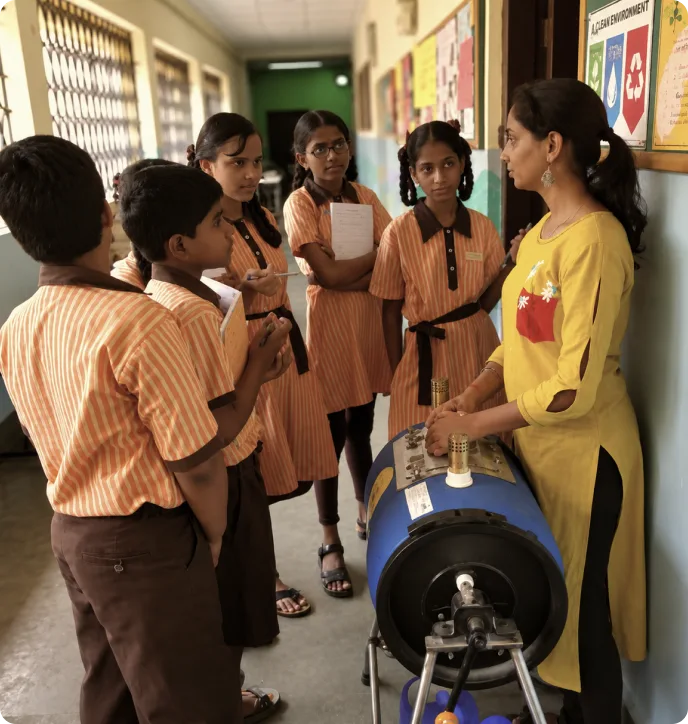
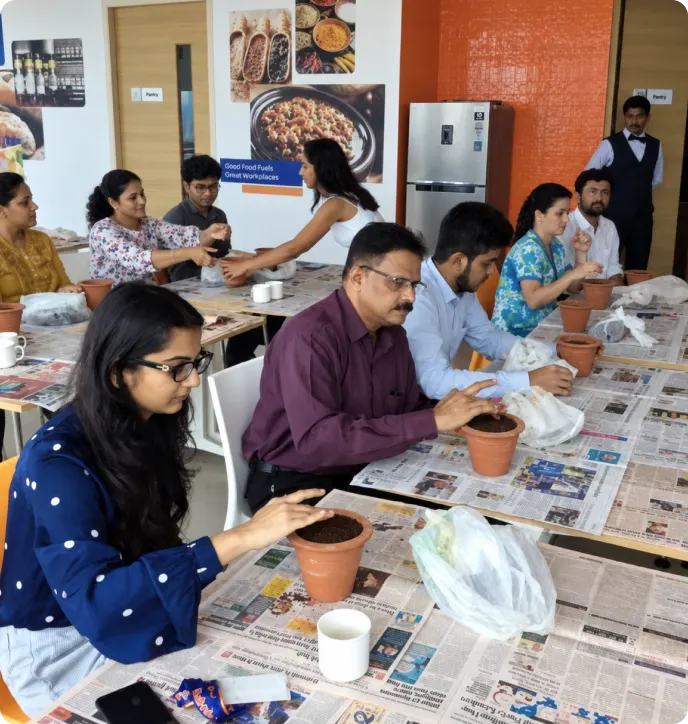
Every eco-education engagement is practical and participatory. Here is what an institution or community can expect.
Interactive workshops on waste, segregation, and composting, run for students or community members.
Live composting demonstrations so participants see the full cycle for themselves.
Segregation training that builds the one habit everything else depends on.
so the learning does not stop when the session ends.
Across seventeen years, RUR’s eco-education work has reached more than 50 lakh people, through schools, communities, workshops, and campaigns. Each session plants a small idea that grows well beyond the room it started in, as children take what they learn home to their families and communities carry it forward on their own.
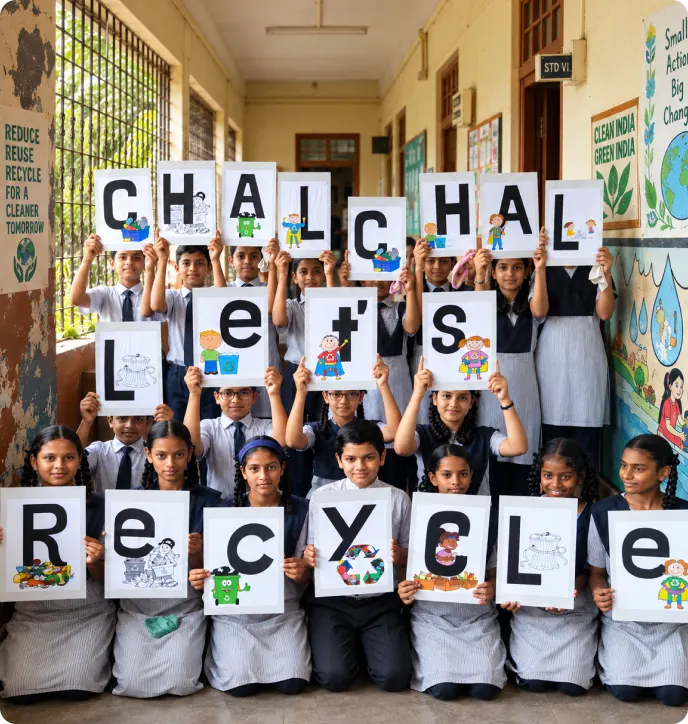
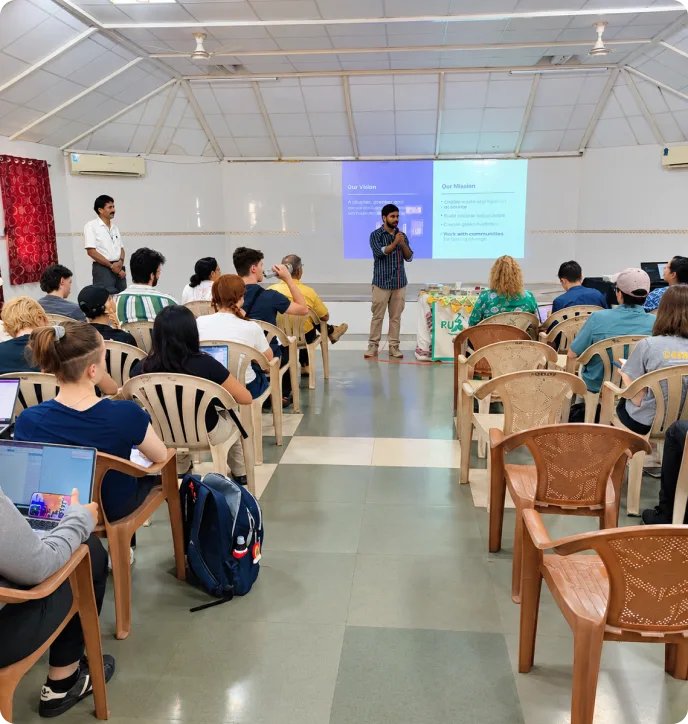
A CSR programme can create infrastructure, but education can create behaviour that lasts beyond the programme itself.
RUR works with corporate partners to design eco-education initiatives around their CSR priorities—from schools and communities to wider awareness programmes.
Depending on the programme, impact can be measured through people reached, institutions engaged, sessions conducted and communities supported.
If you are not sure how much waste your kitchen actually generates, or where it currently goes, a waste audit is the clearest place to start. It costs nothing to enquire, and the findings are yours to use whether or not you go further with RUR.
RUR’s eco-education programme is a set of hands-on learning experiences designed to change how people understand and handle waste. Rather than teaching sustainability only as theory, the programme lets participants see and do the whole process for themselves, from segregating waste to watching it become compost to growing plants in that compost. It is delivered to schools, communities, and organisations through interactive workshops, live composting demonstrations, and segregation training. The goal is to make sustainability tangible and memorable, so that it becomes a genuine everyday habit rather than a lesson that is quickly forgotten. Over seventeen years, RUR’s eco-education work has reached more than 50 lakh people across India.
A wide range of institutions and groups can bring RUR eco-education to their community, including schools, colleges, housing societies, corporate offices, and community organisations. Schools use it to make environmental learning practical and engaging for students. Housing societies and communities use it to build better waste and segregation habits among residents. Companies fund it as part of their corporate social responsibility programmes to create lasting environmental impact. RUR tailors each programme to the audience, whether that is a classroom of schoolchildren, a group of residents, or employees at a workplace, so the sessions are relevant and effective for the people taking part.
Installing a composter solves a waste problem for one location, while eco-education changes how people think about waste everywhere they go. The two work best together. A composter processes the waste that a kitchen or community generates, but an education programme builds the understanding and the habits, particularly correct segregation, that make composting succeed and that people carry into the rest of their lives. This is why eco-education has such lasting value, and why it is especially powerful as a CSR investment. A machine works for as long as it runs, but a changed habit continues to influence a person’s choices, and often their family’s choices, for years afterward.
Yes. Eco-education is one of the most impactful and lasting initiatives a company can fund through its corporate social responsibility budget. Because the outcomes are both meaningful and measurable, such as the number of people reached, the number of schools engaged, and the habits established, it produces clear, reportable impact that aligns with environmental and social goals. RUR works with corporate partners to design education programmes that match their CSR priorities and the communities they want to support. Unlike one-time interventions, an education programme continues to deliver value after the funding period, because the awareness and habits it builds stay with the people who took part.
RUR’s eco-education programme works across a wide range of ages and audiences, because the core approach, learning by seeing and doing, is effective for everyone. For schoolchildren, sessions are designed to be engaging and memorable, turning waste and composting into a hands-on discovery. For adults in housing societies, workplaces, and communities, the focus shifts toward practical segregation habits and the reasons behind them. The content and delivery are adapted to suit the audience, whether that is a young student, a resident, or an employee, so that every session is relevant and genuinely useful for the people attending.
