
Extended Producer Responsibility, or EPR, places responsibility on companies that put packaging on the market to ensure that a defined share of that packaging is collected and recycled.
RUR’s Tetra Pak recycling programme provides an established collection and recycling network for carton packaging, with documented volumes that can support your
EPR reporting.
Meeting an EPR target requires more than a good intention. It requires documented collection and recycling volumes a company can report against its obligation.
Existing and expandable carton collection points across schools, institutions, and communities.
Cartons are sent for specialised recycling that separates and reuses the paper, plastic, and aluminium layers.
Recorded quantities collected and processed, reportable against an EPR target.
Recycled material becomes school desks and benches, giving the programme a demonstrable outcome beyond a tonnage figure.
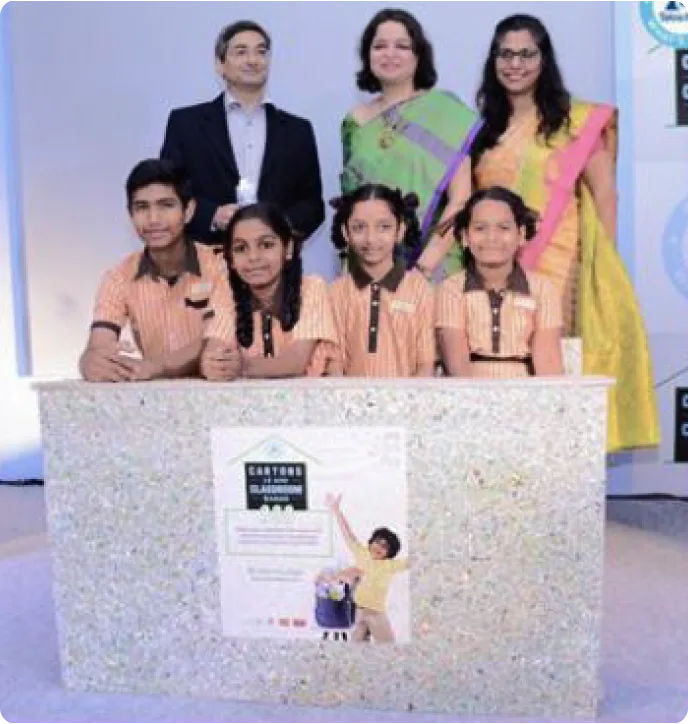
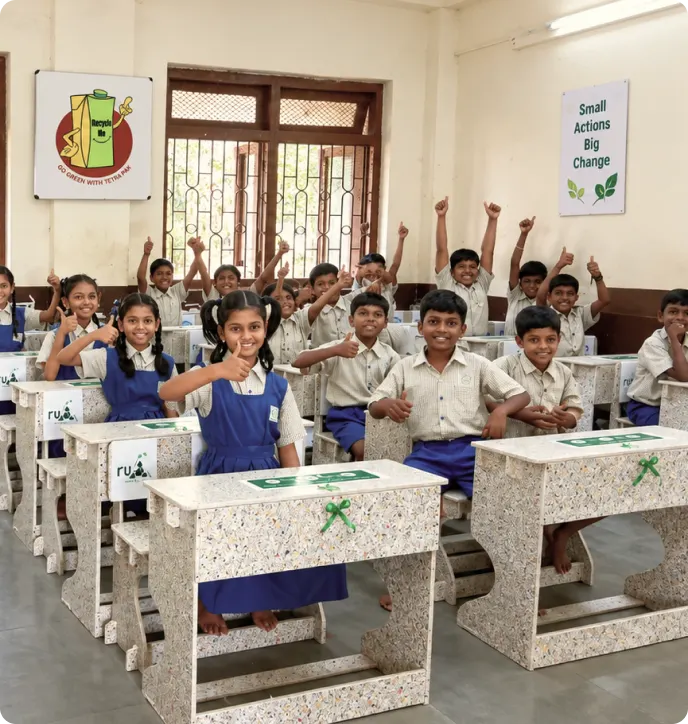
An EPR obligation can be met purely as a paperwork exercise, or it can be met through infrastructure that produces a visible, positive outcome. RUR’s programme has already turned millions of collected cartons into school desks and benches, giving companies fulfilling their EPR requirement a story worth telling alongside the compliance figures, rather than a target met and forgotten.
Tell us about your packaging and EPR requirements. We’ll help you understand how RUR’s collection and recycling infrastructure can support your programme.
Extended Producer Responsibility, or EPR, is a regulatory framework that requires companies placing packaging, including beverage cartons, on the market to ensure a defined percentage of that packaging is collected and recycled. It shifts responsibility for a product’s end-of-life management partly onto the producer rather than leaving it entirely with municipal waste systems. For beverage and food companies using Tetra Pak or similar carton packaging, this means demonstrating that a specific volume of their packaging is being collected and recycled each year.
RUR operates carton collection infrastructure across schools, institutions, and communities, and sends collected cartons for specialised recycling that separates and reuses the paper, plastic, and aluminium layers. RUR documents the volumes collected and processed, which a company can report against its EPR target. Because the collection and recycling process is already established and ongoing, a company does not need to build this infrastructure itself, it can partner with RUR’s existing programme.
Cartons collected are sent for specialised recycling and the recovered material is turned into durable finished products, primarily school desks and benches, many of which are donated directly to schools. This gives an EPR programme a visible, demonstrable end use rather than a tonnage figure alone, which can strengthen a company’s sustainability communications alongside its formal compliance reporting.
The underlying collection and recycling infrastructure is the same, but the framing and reporting differ. The CSR partnership under RUR’s CSR programmes is structured around voluntary corporate social responsibility funding and storytelling, such as sponsoring a collection drive or a desk donation campaign. The EPR page addresses the more formal, regulatory obligation that packaging producers carry under Extended Producer Responsibility rules, with documented, auditable volumes reported against a specific compliance target. A company can engage with RUR on either basis, or both, depending on its needs.
